
What Is a Water Flosser, and Is It Worth Using?
Share
Short answer: A water flosser is a handheld device that sprays a thin, pulsing stream of water between your teeth and along the gumline to wash out food and plaque. The ADA says it can help people who find string floss hard to use, including people with braces or bridges. It works alongside twice-daily brushing, not instead of it.
Why isn't brushing alone enough?
Oral Care Beyond Brushing
Brushing alone can’t reach every corner of your mouth. Food particles and plaque hide between teeth and below the gumline, leading to gum problems, bad breath, and cavities. Flossing is essential, but traditional string floss can be messy, uncomfortable, and difficult to use — especially with braces, implants, or crowns.
That is the gap a water flosser fills. The ADA lists water flossers as one of the accepted tools for cleaning between teeth once a day.
What are the benefits of a water flosser?
- Cleans between teeth and along the gumline: the water stream flushes food and plaque from spots a brush misses.
- Gentler for many people: there is no thread to snap into sore gums, so people who find floss painful are more likely to keep going.
-
Perfect for Braces & Implants: Cleans around orthodontic appliances with ease.
-
Fresher Breath: Flushes out bacteria and debris that cause bad breath.
What should you look for in a water flosser?
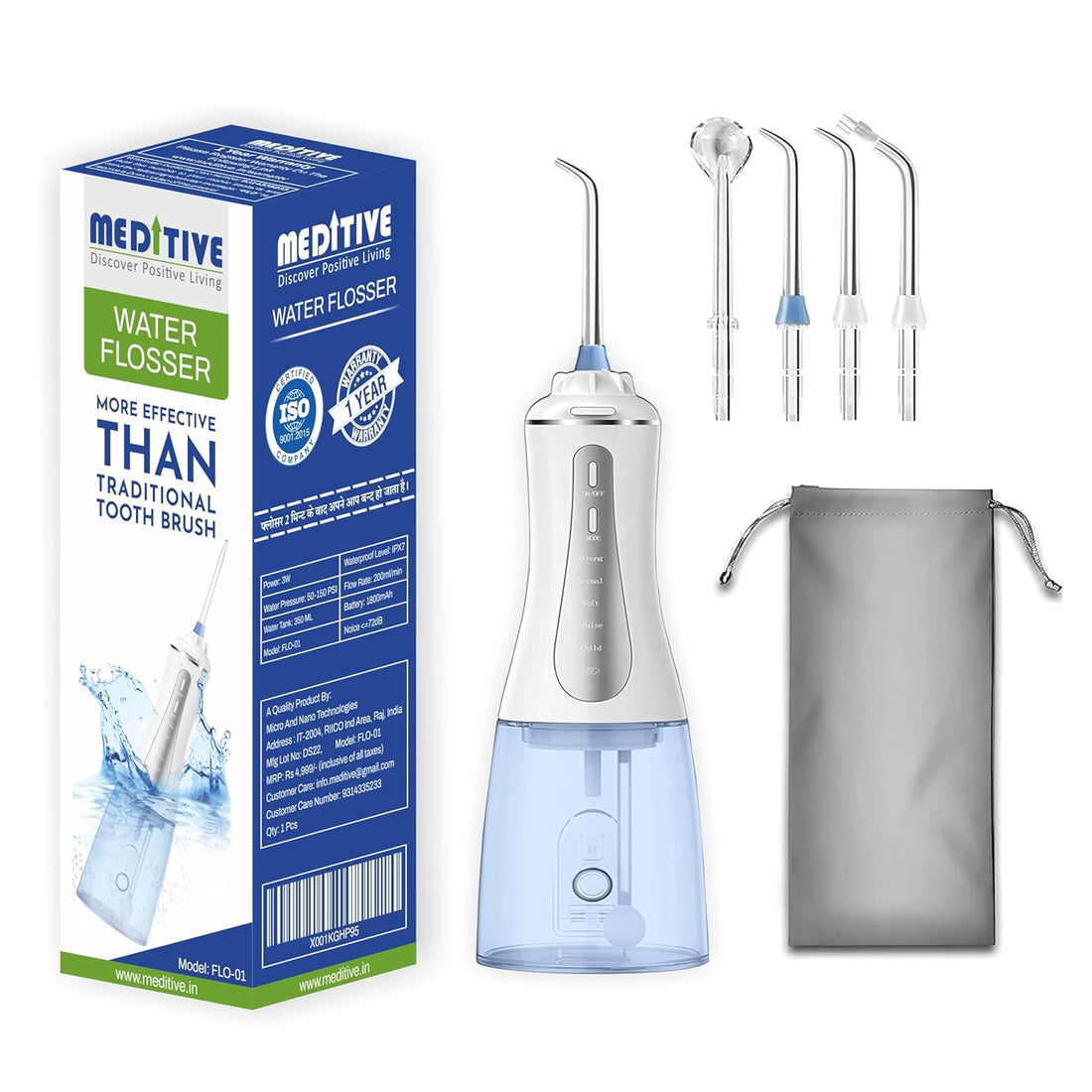
1. Large 350ML Detachable Water Tank
-
Big enough for a full mouth clean without refilling.
-
Fully detachable for easy washing — prevents bacteria build-up.
2. Three pressure modes
- Normal, Soft and Pulse modes, so you can start gently and step up.
- A pulsing stream that is aimed along the gumline, one gap at a time.
3. Four jet tips
- Four tips in the box, so each family member can have their own. Replace tips every 3 to 6 months.
- The tip turns, which helps you reach back molars and braces.
4. Long-Lasting Battery & USB Charging
- USB charging, with up to 14 days of use per charge at about 60 seconds a day.
-
Cordless design for home or travel use.
5. IPX7 Waterproof Design
- Sealed body rated IPX7.
-
Can be used in the shower without worry.
How does a cordless flosser compare with a basic one?
| Feature | MEDITIVE Dental Flosser | Typical Water Flosser |
|---|---|---|
| Tank Capacity | 350ML detachable | 150–200ML fixed |
| Cleaning modes | 3 (Normal, Soft, Pulse) | 2 to 3 |
| Tips | 4 jet tips | 1 to 2 |
| Battery life | Up to 14 days at 60 seconds a day | Varies |
| Waterproof Rating | IPX7 | Splash-proof |
Is a water flosser worth it?
For most people who skip flossing because string floss is fiddly or painful, yes. A water flosser makes daily cleaning between teeth easier to keep up, which is what protects your gums. Keep brushing twice a day with fluoride toothpaste and see your dentist for regular check-ups.
Which water flosser should you choose?
Start with what matters for any product of this type:
- A tank big enough for one full session (about 300 ml or more), so you do not refill halfway
- A soft or low-pressure mode for beginners and sensitive gums
- A real waterproof rating (IPX7) if you will rinse it or use it in the shower
- Replaceable tips, so each family member has their own
- Battery life that lasts at least a week between charges
How the MEDITIVE Water Flosser Cordless fits: a 350 ml detachable tank, IPX7 waterproofing, Normal, Soft and Pulse modes, 4 jet tips in the box, USB charging with up to 14 days per charge at 60 seconds a day, a 1-year warranty. It usually sells in the ₹1,500–₹2,300 range; see the product page for today's price. See the MEDITIVE Water Flosser Cordless.
Frequently asked questions
Can a water flosser replace brushing?
No. A water flosser cleans between teeth and along the gumline, but it does not replace brushing. The ADA advises brushing twice a day for two minutes with fluoride toothpaste and cleaning between your teeth once a day. Use the water flosser for the between-teeth step.
Should I use a water flosser before or after brushing?
Either order works. The American Dental Association says flossing before or after brushing is fine as long as you clean thoroughly, and Waterpik says the same for water flossers. Flossing first clears food so the brush reaches more surface; flossing after shows what brushing missed. Pick the order you will stick to every day.
Who benefits most from a water flosser?
People with braces, bridges, implants or crowns, people whose gums bleed or hurt with string floss, and anyone who simply does not floss because it feels difficult. The ADA notes that water flossers can help people who have trouble flossing by hand or who have dental work that makes flossing hard.
How long does one water flossing session take?
About one to two minutes for a full mouth. Work slowly along the gumline from the back teeth to the front, inside and outside, pausing briefly at each gap. A 350 ml tank is usually enough for one full session without refilling.
Is a water flosser safe for children?
Many children aged about 6 and older can use one with an adult watching, on the softest setting. Children's teeth and gums vary, so ask your child's dentist first, and make sure each child has their own tip.
Related guides
- Water Flosser vs String Floss: Which Actually Cleans Better? (A Guide for India)
- How Do You Use a Water Flosser Correctly? A Step-by-Step Guide for Beginners in India
- What Are the Most Common Water Flosser Mistakes? 8 Things Most People Get Wrong
- Can You Use a Water Flosser With Braces, Implants or Sensitive Gums? A Guide for India
- Plaque vs Tartar: What's the Difference, and Can a Water Flosser Remove Them?
Sources
- ADA MouthHealthy: Water Flossers and Water Flossing
- ADA MouthHealthy: Flossing
- American Dental Association: Dental Floss/Interdental Cleaners
- NHS: How to keep your teeth clean
This guide is general information, not medical advice. If you have a health condition or symptoms that worry you, speak to a doctor or dentist.